In addition to the Introduction below, there are several parts to this section. To access each part, slowly drag your mouse cursor below the Middle Efforts tab until the tab for the part you want to access appears. Click on the tab for that part. You can also click on the links below.
Essay #7 Essay #8 Essay #9 Essay #10 Essay #11 Essay #12
Essay #13 Essay #14 Essay #15 Essay #16 Essay #17 Essay #18
Essay #19 Essay #20 Essay #21 Essay #22
Introduction to the Middle Writings: From Ontology to Christology
Let us begin again after our somewhat tortuous journey through the Early Writings. We emerge here as from a dream in exploration of the divine mind. The Early Writings took us into the interstices of creation. We reemerge studded with insights but also somewhat laboring under the illogic of dreamtime. With those metaphysical underpinnings, let us take a more practical turn and wonder aloud how we might live in conscious accord with the principles heretofore revealed. From those scattered and multifarious insights into the structure of the universe, might we extract a set of guidelines for living in closer harmony with the Source of All, which could properly be called the Way of Return?
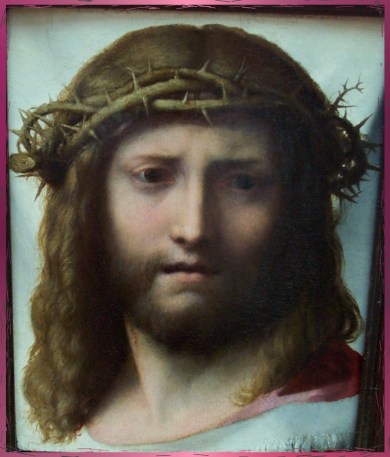
Here we embark upon a new journey. Whereas the Early Writings focused on the creative opulence of the Father, the Middle Writings focus on the role of the Son. In the Early Writings, we undertook an elucidation of the ontology of Genesis, which foreshadows the ontology of the logos presented in John I. Here we look to Jesus Christ as the embodiment in the flesh of all the divine principles and qualities reflected in that ontology. For it is one thing to ponder rather abstractly the wonder and beauty of the Divine Essence. It is quite another to reflect on the personhood that exemplifies more than any other the way of branching from that root. The passage we take here is thus from ontology to Christology, from a less-than-fully-embodied understanding of the structure of creation to a fully-embodied embrace of principles for living.
In the Early Writings, we saw illuminated the Divine Excursion into our world of space and time. Here we more closely follow from the human side the Way of Return to our Point of Origin. The Father’s gestures of creation and perpetual involvement are now matched by a perfect exemplar of effort and surrender in the Son. The intersection of both God and man comes at the point of kavannah, where human and divine will become one and all worldly actions are guided by the non-doing of perfect and uninterrupted chochmah through the Holy Spirit. Only in Jesus can we observe a human being who was monogeneis–of one genus–with the Father. In him we see the path we are on already completed. From his journey and his example, we seek to discern insight into the logos less as expansive creative principle than as a magnetic pole that draws our actions toward it and attunes our lives to the deepest reality within us.
In making the transition from ontology to Christology, we must begin to look at creation from the point of view of ourselves as receivers. Earlier we mainly took the point of view of God as giver. However, it is only from the point of view of creation received that we can begin to see ourselves as we truly are. We need our link to the Source to become clear in order for us to begin to re-discover our life as a Way of Return. We need to see how we as receivers hang by the threads of creation. Then and only then can we begin to trace our way home, and to see our whole life as a process of return and making-ready for death. Thus, the transition from ontology to Christology does not leave the ontology of the Early Writings behind. Rather, it makes us turn and view it differently. In this turning we begin to see it as the root from which Christ sprang, and the practices of return with him. Here we discover Christologic ontology, which is the basis of Christology proper, that is, the set of attitudes and spiritual guidelines and practices that Christ came to teach us that define the Way of Return.
We will see that the Way of Return has a wholly different organizing principle or set of organizing principles from those which inhabit modern culture in the West. It turns out that we Westerners tend to operate on a daily basis in almost total oblivion of our connection to the Source. We act either as if we were entirely responsible for our own lives (including our creation) or as if the universe is deterministic, like a self-contained clock whose principles we can discover and make use of for our own ends. In either case, we will need to take a close look to expose the flaw in our underlying principle. There is a resulting moral dilemma generated by these positions that needs to be exposed also. Like many other dilemmas which give us no footing, it allows us to drop down into a deeper understanding of ourselves and the world. It will also help us make the turn toward Christologic ontology and hence open for us the very Way of Return.
 Karunandaji's Mind